
Huguang Guild Hall (Migration Museum)

Taxi & Street Navigation Help
师傅,请带我到湖广会馆(芭蕉园1号,东水门附近)。谢谢!
Opening Hours & Best Time
09:00 - 18:00 (last entry 17:00)
💡 Pro Tip: The ¥30 ticket includes the migration museum inside — the single best explanation of why Sichuan-Chongqing culture exists at all (the 'Huguang fills Sichuan' mass migration). Read it before the temples; it reframes everything.
Accessibility & Luggage Lockers
Accessibility: ♿ Wheelchair & Stroller Friendly
Main courtyards ramped; some upper halls are stair-only. Elevator to the main exhibition floor.
🧳 Luggage Storage: Free lockers at the ticket office.
Nearby Landmarks & A Short Train Ride
The 4 places worth pairing with this spot — each one opens straight into Apple Maps or Amap, with the Chinese name you can show a driver. One pick sits in Chengdu (HSR ~1 h 2 min) — a short high-speed ride, not a walk. Chongqing's own list came out one short of a pair, and this is the nearest pick that fills it.
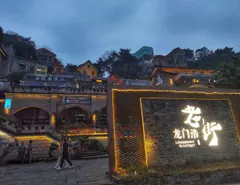 龙门浩老街Longmenhao Old StreetHistoric districtAbout a 15-min walk0.79 kmacross the river
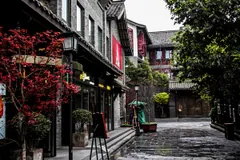
Chinese names and pins are matched against each city's own map data at build time; a place only gets Directions once its pin has been verified, otherwise the button searches by name. Cards with an amber city tag are in another city — the ride time shown is the fastest train of the day.
About Huguang Guild Hall (Migration Museum)
1. Historical Origins: A Hall Built by People Who Had Just Arrived
In the seventeenth century the Sichuan basin was dangerously empty — war, famine and epidemic had taken most of its population. The state’s answer was resettlement on a massive scale, moving farming families in from Huguang (roughly today’s Hubei and Hunan) and from provinces further away. The episode is known as Huguang fills Sichuan, and it is the reason the Sichuan basin speaks a dialect of its own and eats the way it does.
The people who arrived needed somewhere to be a stranger together. That was the guild hall: an association organised by native place, funded by the merchants among its members, that handled lodging for new arrivals, credit, arbitration between members, care for the old, and burials. Each hall was also a temple, dedicated to a patron deity carried over from the home province.
The complex above the Yangtze near Dongshuimen is the survivor — three halls built against the slope from the mid-eighteenth century, for the provincial associations that traded through this port. It is not the seat of any government. It is what a migrant community builds for itself when nobody else will.
2. What to Spot: Gilt Woodwork, Three Halls, One Story
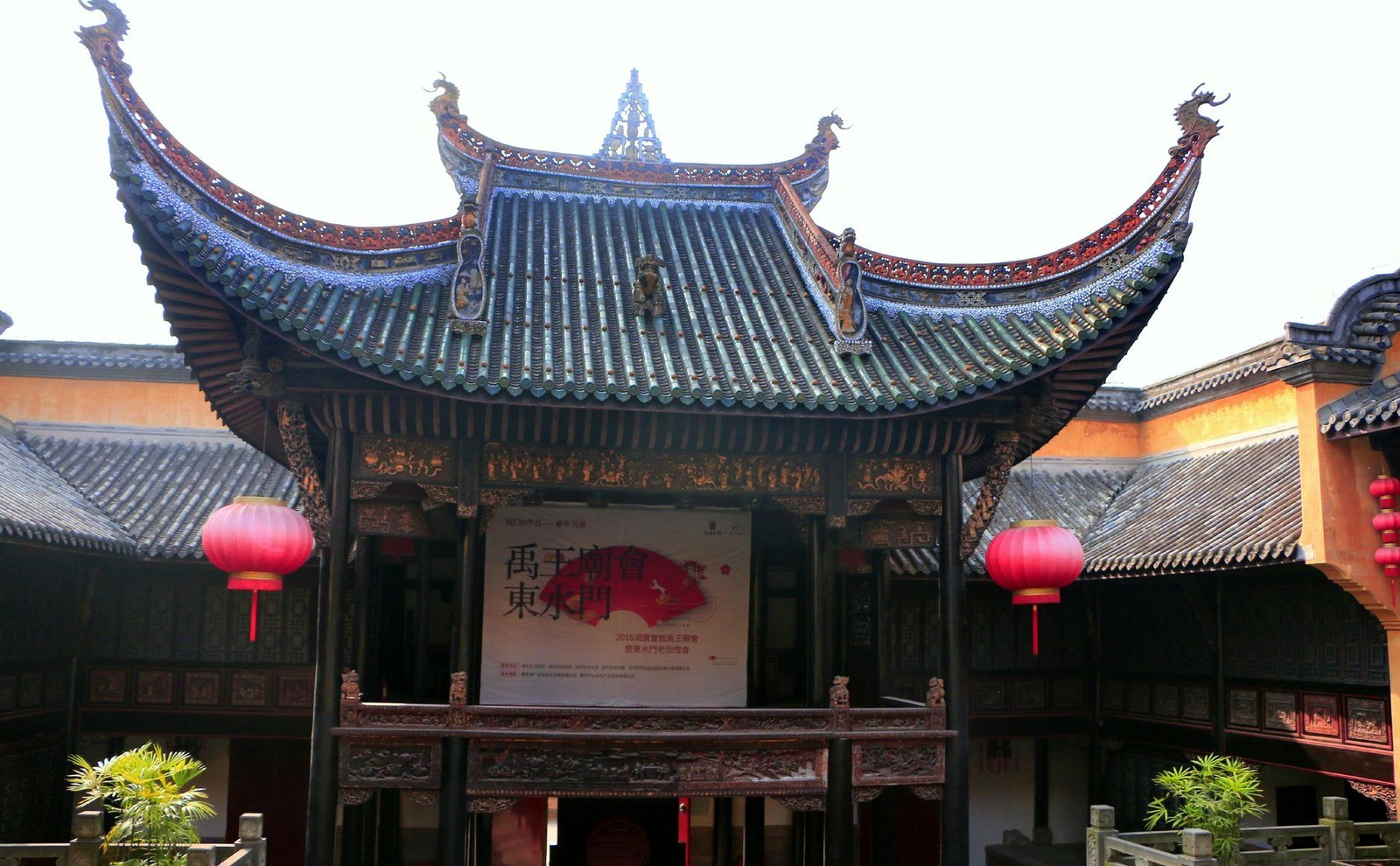
🎭 The Opera Stage
- The Story: Every guild hall had one, and it was not decoration. Opera was how an association entertained its members, marked the patron god’s festival, and demonstrated solvency to rivals. The stage here is the building’s showpiece, its beams and brackets carved and gilded.
- What to Look For: Carving depth. Look at the underside of the eaves and the joinery around the stage — this is wood worked to be seen from below in firelight.
🏯 The Three Halls
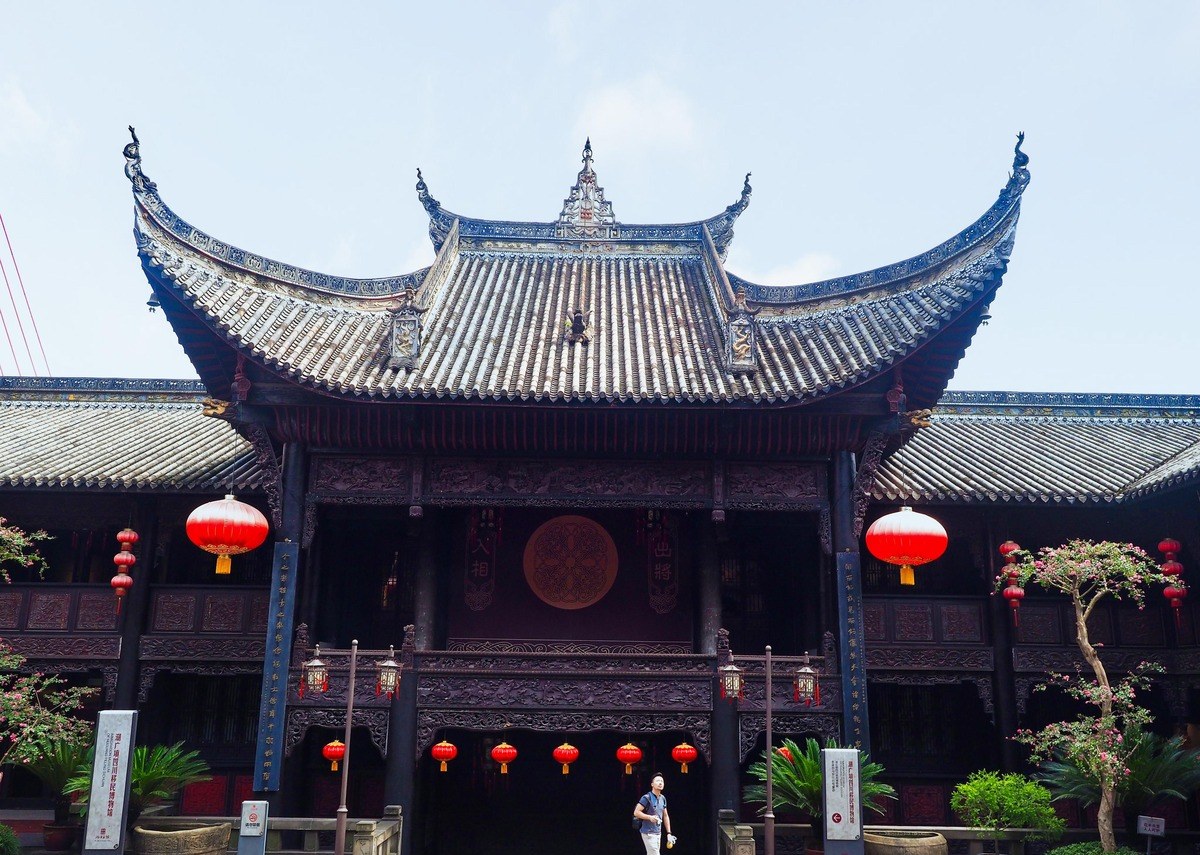
- The Story: Yuwang Palace, the Qi’an Guild and the Guangdong Guild occupy one walled compound, each with its own courtyard, its own gate and its own deity.
- What to Look For: The differences between them. Same city, same century, but three different provinces’ ideas of how a hall should look — the surest evidence that these were not a single architectural project.
📜 The Migration Exhibition
- The Story: The compound now also houses a museum on the resettlement itself: route maps, household registers, family papers, and the mechanics of moving a population across a province.
- What to Look For: Read it before you walk the buildings. The architecture stops being a nice old courtyard and becomes a piece of social infrastructure.
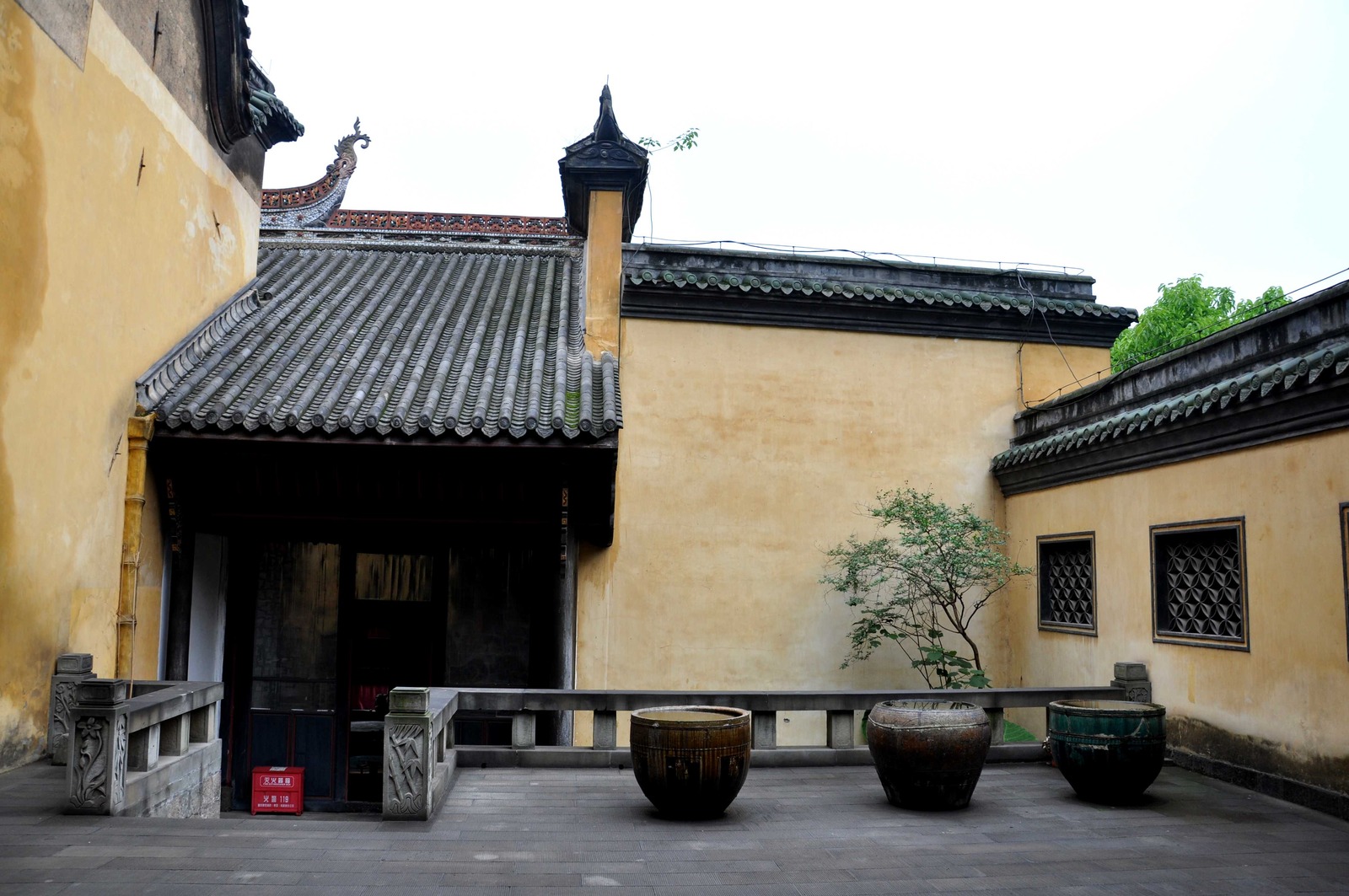
🌿 The Courtyards
- The Story: Between the halls there are open courts, stone-paved, planted with trees that have clearly been there longer than the ticket office.
- What to Look For: The walls. From the street you would walk past the compound without noticing; inside, the city noise drops away almost immediately.
3. Cultural Contrast: A City That Explains Itself
Most Chinese historic buildings tell you what a dynasty did. Huguang tells you what ordinary people did: move, work, organise, and pay for their own community because the state was not going to do it for them.
That matters more in Chongqing than it would elsewhere. This is a city of incomers by origin, and the willingness to absorb strangers is not a modern slogan here; it is an economic necessity that has been running for three hundred years. The exhibition makes the point with paperwork, which is more convincing than any interpretive panel.
The contrast is with the great state museums. The Three Gorges Museum downstream covers part of the same regional history, and it is free — if your interest is the sweep of the region rather than this specific institution, it is a perfectly good substitute. Huguang is worth paying for when you want the intimate version: one community, its own hall, its own god, its own accounts.
4. Practical Essentials: Tickets, Transit & Scam Alerts
Tickets & Passport Booking
- Price: A paid heritage site with a single admission covering the halls and the migration museum. Rates change and there are seasonal and combined options, so check the site’s official WeChat account on the day rather than trusting a figure quoted elsewhere. Bring your passport — foreign visitors buy at the ticket window in the usual way.
- Opening Hours: Daytime, with the last entry in the late afternoon. Confirm the current closing time at the window or online before making it the last stop of the day.
- Concessions: Seniors above a certain age and small children typically enter free, and students and younger seniors usually get a discount. The thresholds are posted at the window.
How to Get There
- By Metro: Line 1 to Xiaoshizi (小什字), then about ten minutes on foot towards the Yangtze, under the cableway and into the streets below the Dongshuimen Bridge.
- Show Your Driver: 师傅,去湖广会馆(芭蕉园1号、东水门长江边),谢谢!
Inside Tips & Scam Alerts
- Come in the morning, then walk across the Dongshuimen Bridge for lunch. The bridge is a few minutes away and gives you the skyline and the river in one go.
- Photography is fine; tripods generally are not. Ask at the gate if you are carrying one.
- The stage occasionally hosts performances on weekend afternoons. Schedules are irregular and announced by the site, so ask on arrival rather than planning around it.
- Individual halls sometimes close for private events. If one gate is shut, it is usually temporary — the compound is small enough to loop back.
- If you are short of time or indifferent to migration history, the free Three Gorges Museum covers a good part of the same story.
- Complaints or overcharging: the 12345 hotline is free from any local phone and has English-speaking operators.
Quick Answers
The 6 things visitors ask before setting out, answered from the same verified record used across this page.
- How much does it cost to visit Huguang Guild Hall (Migration Museum)?
- ¥30.
- What are the opening hours at Huguang Guild Hall (Migration Museum)?
- 09:00 - 18:00 (last entry 17:00).
- Is Huguang Guild Hall (Migration Museum) wheelchair accessible?
- Yes. Main courtyards ramped; some upper halls are stair-only. Elevator to the main exhibition floor.
- How do I tell a taxi driver to take me to Huguang Guild Hall (Migration Museum)?
- Copy this line into DiDi or show it to the driver: 师傅,请带我到湖广会馆(芭蕉园1号,东水门附近)。谢谢!
- Can I leave my luggage at Huguang Guild Hall (Migration Museum)?
- Free lockers at the ticket office.
- Will English work at Huguang Guild Hall (Migration Museum)?
- Yes — staff used to foreign visitors handle English, and the site scores 3/5 on our foreign-friendliness scale.
Where to go next
Three short lists, recomputed at build time from the same coordinates and categories as the pages themselves — no paid placement, no hand-picked names. Every card is a published guide.
Next stop in Chongqing
Straight-line distance from this spot, so you can judge what is walkable and what needs a taxi.


More like this, elsewhere in China
If museum is what you came for, these are the closest equivalents you can reach in another city — ordered by distance, one city per card.


Change the subject
Deliberately a different category, for when one more temple or garden would blur into the last one.


Lists are derived from coordinates and category alone. Fix a wrong pin or re-tag a place and every list that mentions it moves with it.
Before you go · arrival essentials
Practical guides that pair with this kind of place — picked by category, not sponsored placement.
- Pay with Alipay & WeChat PayPayment · Set up Alipay or WeChat Pay on a foreign card — needed at almost every counter.
- Get online with a China eSIMConnectivity · Maps and messaging that work without a VPN, the moment you land.
- Book China train tickets (12306)Trains · Buy high-speed rail tickets with a foreign passport, for getting here and back.